Exploring the limits of scientific inquiry
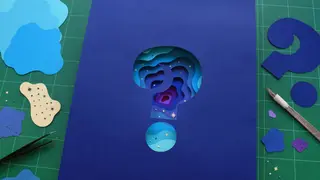
The article discusses whether some fundamental questions in science may remain permanently unanswered. It argues that science is a process of approximation, and while many mysteries have been solved with new methods, some may be beyond our grasp. It also notes that past impossibilities, like knowing star composition, were later resolved.
The article frames science as an evolving approximation of truth rather than a fixed destination, citing how Newton's gravity gave way to Einstein's relativity. It highlights historical reversals of presumed impossibility—Auguste Comte's 1835 claim that star composition would never be known was overturned by spectroscopy. New instruments like radio antennas and microscopes have repeatedly expanded what questions scientists can even conceive of asking, suggesting that today's "unknown unknowns" may someday become tractable problems.
Yet the piece acknowledges genuine limits: some questions may lack observable phenomena, hit fundamental barriers, or involve observation that alters the subject itself. The tension between past successes and present uncertainty defines the "Impossible Questions" package this article introduces.
This piece may reshape public expectations about science's capabilities, offering a nuanced counterpoint to both triumphalist narratives and defeatist skepticism. Researchers could use such framing to manage funding discussions honestly, while educators may find it useful for teaching scientific process over certainty. General readers might develop greater patience with provisional answers, though some could misinterpret acknowledged limits as justification for dismissing established science.