Webb telescope spots puzzling ring variations on distant centaur Chariklo
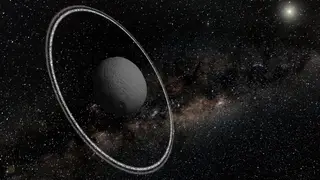
New observations from the James Webb Space Telescope show that Chariklo, a small ringed world beyond Saturn, has rings that are changing in ways not yet understood. The centaur object, located between Saturn and Uranus, exhibits mysterious variations that challenge current models of ring systems.
Chariklo is a centaur — a small body orbiting between Saturn and Uranus — and one of the few objects beyond the giant planets known to host rings. The James Webb Space Telescope's new observations reveal that these rings are changing in ways that current models cannot explain, adding fresh mystery to a world already notable for its unusual structure.
The variations suggest ring systems around small bodies may be more dynamic than previously assumed. Since Chariklo's rings were first discovered, they have helped scientists understand how such structures can persist around objects far smaller than planets. These new findings may push researchers to revise their understanding of ring stability and evolution across the solar system.
These observations could refine how planetary scientists model ring formation and evolution, with potential applications to other ringed bodies in the solar system. The findings may also influence which targets future observation campaigns prioritize, as small objects like Chariklo provide accessible case studies for dynamic processes. For the public, such discoveries demonstrate how advanced telescopes continue to reveal unexpected complexity in familiar regions of space, reinforcing the value of continued investment in astronomical infrastructure.