Hormuz conflict projected to trim global fossil-fuel CO2 output by 0.5% in 2026
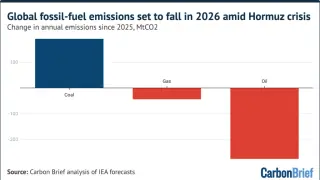
Carbon Brief analysis indicates that global fossil-fuel emissions will decline roughly 0.5% in 2026, driven by the Hormuz crisis disrupting oil and gas trade. While coal demand is forecast to rise 1.2%, that increase is more than offset by reductions in oil and gas emissions. The assessment relies on updated IEA forecasts, also noting El Niño effects and wasted renewable output in China as contributing factors.
The IEA's September 2026 coal report reversed its earlier projection of declining coal demand, now anticipating a 1.2% increase. Higher gas prices following the Hormuz disruption are boosting coal use, though few nations possess the infrastructure to switch fuels at scale. El Niño conditions are simultaneously raising cooling demands while suppressing hydropower generation in key markets.
Oil forecasts have shifted dramatically, from a projected 930,000 barrels-per-day increase in January to a 2.5 million barrels-per-day decline by September. The IEA now expects oil consumption to remain essentially flat through 2027, raising questions about earlier predictions that global demand would not peak until later. China's wasted renewable output also contributes to the year's emissions picture.
This projected emissions decline, while modest, could signal a turning point in energy markets. Higher prices from the Hormuz crisis may accelerate permanent shifts away from oil and gas, affecting consumers through elevated energy costs and industries dependent on fossil fuels. The flat oil demand outlook through 2027 suggests structural changes, though the coal increase shows crisis-driven fuel switching can offset some climate gains. Developing nations reliant on imported energy may face the greatest economic strain.