Venus's slow spin may have pulled its moon into a fatal collision
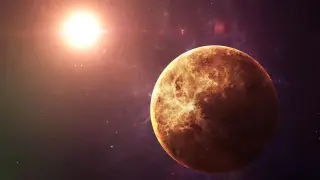
Computer simulations suggest that if Venus once had a moon, the planet's extremely slow rotation would cause the moon to spiral inward and crash into the planet. The study indicates that larger moons would fall even faster, offering a natural explanation for Venus's moonless state without requiring a catastrophic external event.
The research builds on decades of questions about why Venus and Earth diverged despite similar size and mass. Earth's moon drifts outward roughly four centimeters per year, measured using mirrors left by Apollo 11 astronauts. Venus, completing one rotation every 243 Earth days, lacks that outward push. Kane's simulations tested moons from half to ten times the mass of Earth's moon, and nearly all spiraled inward to collide with the planet. Larger moons fell faster.
The study does not confirm Venus ever possessed a moon, only that such a moon could not persist under the planet's rotational conditions. This offers a natural mechanism requiring no catastrophic external event, potentially resolving a long-standing puzzle.
This research could reshape how scientists understand planetary moon systems and their evolution. If Venus's slow rotation doomed its moon, similar dynamics may apply to other slowly rotating bodies across the galaxy, potentially influencing how astronomers identify habitable worlds. The findings may also deepen public appreciation for Earth's unique conditions that sustain its moon, though direct societal impact remains limited to scientific understanding.