Krill Fishing Limits May Not Protect Rebounding Whale Populations, Scientists Say
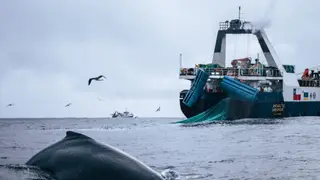
Antarctica's industrial krill fishing fleet has again stopped early after hitting its seasonal catch limit, but researchers argue the current management ignores whales' needs. Whale numbers have recovered since the whaling ban, yet the commission that sets fishing rules has not factored them into its plans. Scientists are calling for stricter regulations as climate change also reduces krill habitat.
The commission’s 620,000-ton catch cap dates to the 1990s, when whale populations were still depleted after the whaling ban. A prior rule spreading catches across vast areas expired in 2024, allowing the fleet to concentrate in krill-dense zones that also attract whales, penguins, and seals. Sea Shepherd has partnered with Stanford and UC Santa Cruz researchers to study feeding overlaps near the South Orkney Islands, with findings expected to inform upcoming commission decisions.
Humpback whales have largely rebounded, while fin and blue whales recover more slowly but appear regularly. Scientists argue the current management plan, designed without whale consumption in mind, now faces a growing mismatch as both whale numbers and fishing intensity rise. Climate change further shrinks krill habitat, intensifying competition between recovering marine mammals and an expanding industrial fishery.
This story could affect global seafood supply chains and conservation policy, as Antarctic krill is used in feed and supplements. If stricter limits are adopted, fishing companies may face higher costs or reduced quotas, while whale-watching and ecosystem-dependent tourism could benefit. The outcome may also influence how other international fisheries account for recovering predator populations, potentially setting a precedent for balancing commercial extraction with marine mammal recovery in a warming ocean.