Record-breaking young exoplanet spotted in its birth disk
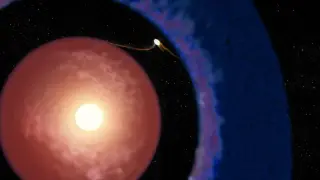
A Jupiter-sized planet less than a million years old has been confirmed, making it the youngest known world. The planet, Elias 2-24 b, is still embedded in the gas and dust disk around its star, offering a direct view of ongoing planet formation. Its rapid assembly challenges current models of giant-planet formation at large orbital distances.
The discovery relied on archived Keck Observatory data using a coronagraph, which blocks starlight to reveal faint nearby objects. Researchers examined seven young stars with debris disks, searching for gaps that might indicate forming planets. Elias 2-24 b was found precisely within such a gap, consistent with the theory that planets carve their orbital paths as they accumulate material.
Previous youngest known planets, orbiting PDS 70 and WISPIT 2, were all over 5 million years old. Elias 2-24 b's rapid assembly at roughly Jupiter's mass suggests giant planets can form much faster than models predict, especially far from their host stars. The system offers a direct view of early planetary development.
This discovery could reshape how scientists understand planetary formation timelines, potentially refining models used to predict where and how quickly worlds emerge. For the public, it offers a tangible glimpse into cosmic origins, connecting our solar system's history to observable phenomena. Educational institutions may incorporate these findings into astronomy curricula, while future telescope missions could prioritize similar young systems, expanding our knowledge of how common such rapid formation is across the galaxy.