Record-breaking infant exoplanet discovered in stellar debris
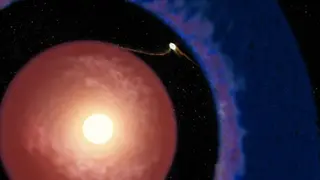
Astronomers have confirmed a newly forming exoplanet, designated Elias 2-24 b, in the debris disk of a young star. With an age under one million years, it is the youngest alien world detected to date.
The newly confirmed world, Elias 2-24 b, resides within the swirling debris disk encircling a young star, a region where planetary material coalesces. Its age of less than one million years places it in an extraordinarily early stage of planetary development, making it a rare observational target for scientists studying how gas giants take shape.
Because the planet is so young, researchers can observe formation processes that are typically hidden by time. This discovery pushes the known timeline of planetary birth backward, offering a direct glimpse into a phase of evolution that astronomers have long theorized about but rarely witnessed in such a nascent state.
This discovery could refine how scientists model planetary formation, potentially reshaping timelines used across astronomy. Researchers studying exoplanets may gain a clearer benchmark for comparing young systems, while the broader public could see renewed interest in how common such early worlds are. The finding may also influence future telescope targeting strategies, though its full implications depend on follow-up observations.