Trump's China Strategy Falls Behind on Every Front
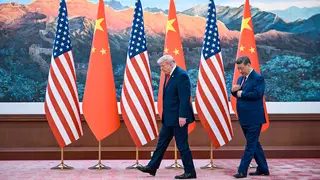
According to a new analysis, the Trump administration's handling of China has been a more significant failure than the Iran conflict, with the U.S. losing ground in economic, military, technological, and geopolitical arenas over 19 months. The authors argue that while the Iran crisis captured attention, Beijing's steady gains will have longer-lasting consequences for American power. They contend that China is not seeking to build a new world order but is still advancing its position relative to Washington.
The analysis, written by scholars from Yale and Penn, argues that the Trump administration's China policy has been a more profound failure than the Iran conflict. Over 19 months, Washington has ceded ground across economic, military, technological, and geopolitical domains. The authors contend this quiet erosion will have longer-lasting consequences for American power than the more visible Iran crisis.
Beijing has reportedly weathered the trade war, narrowed the technology gap, and tightened control over critical supply chains. It has also increased pressure on Taiwan and strengthened ties with Russia and the global south. The administration's 2025 National Security Strategy notably failed to designate China as the paramount competitor, and no stable hierarchy of objectives was ever articulated. A Xi visit to Washington is scheduled for September 24.
This analysis could shift how policymakers and the public evaluate the administration's foreign-policy record, moving focus from the immediate Iran crisis to quieter, structural erosion of US advantages. If accurate, it may embolden allies to hedge their security and economic bets, while potentially influencing midterm election debates. The long-term nature of the damage means its societal impact—on trade, technology, and military posture—may only become fully apparent in the coming years.