Brain's Dual Origins Revealed: Two Ancient Neural Systems Fused
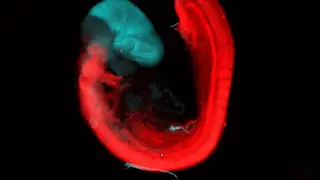
New research indicates that the human brain develops from two distinct progenitor cell types, one forming the forebrain and midbrain, the other the hindbrain. This suggests the brain evolved by merging two separate primitive nervous systems rather than from a single origin. The finding also explains past difficulties in growing hindbrain tissue in the lab and enabled the first successful cultivation of functional human hindbrain motor neurons.
The discovery hinges on two progenitor cell types distinguished by the genes OTX2 and GBX2, which respectively give rise to the forebrain/midbrain and hindbrain. This developmental split was confirmed across mice, humans, chickens, zebrafish, and acorn worms, placing the merger of these systems at roughly 550 million years ago—before jellyfish, which retain two separate nervous systems, diverged from our lineage. The finding also resolves a long-standing lab challenge: hindbrain neurons failed to grow from the wrong progenitor source, but succeeded once the correct GBX2-expressing cells were used, enabling the first cultivation of functional human hindbrain motor neurons.
This research could reshape how scientists study and treat hindbrain-related conditions like ALS and spinal muscular atrophy, as lab-grown neurons may accelerate drug testing and disease modeling. It may also clarify how appetite-suppressing drugs such as Ozempic act on the hindbrain, potentially informing safer or more targeted therapies. Beyond medicine, the dual-origin framework could influence evolutionary biology and our understanding of brain development, though its practical societal impact will depend on translating these cellular insights into clinical applications over time.