Roman telescope's fuel savings could extend its mission to over two decades
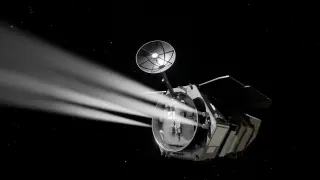
NASA's Nancy Grace Roman Space Telescope may operate for at least 22 years, more than double its original 10-year design life. An exceptionally precise first course correction and extra fuel at launch contributed to the savings. The extended mission could allow decades of additional scientific observations.
The Roman telescope's fuel efficiency stems from multiple compounding factors. Its first course correction on Aug. 31 consumed only 40 pounds of propellant versus the 441 pounds allocated, achieving over 99% accuracy. The spacecraft also launched lighter than anticipated—17,760 pounds versus a conservative 21,605-pound maximum—allowing engineers to fill the tanks to capacity rather than carrying only the minimum required.
Additional savings are projected ahead. The precise first maneuver means the second mid-course correction can be smaller and delayed longer, conserving still more propellant. Together, these efficiencies could extend Roman's science operations from the original 10-year design to at least 22 years, potentially enabling decades of additional observations of the universe.
An extended Roman mission could substantially amplify the scientific return on NASA's investment, allowing researchers to conduct long-term sky surveys and time-domain studies that shorter missions cannot support. This may benefit astronomers, astrophysicists, and the broader scientific community, while also offering educational and inspirational value for the public. However, extended operations require sustained funding commitments, which could influence NASA's future budget priorities and mission planning across the agency.