Roman Space Telescope Captures First Starlight, Marking Key Milestone
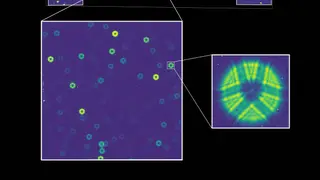
NASA's Nancy Grace Roman Space Telescope has detected its first photons of starlight using its Wide Field Instrument, a critical step before full operations begin. The telescope, launched on August 30, was cooled to extremely low temperatures to activate its infrared systems. Once fully operational, it will survey large sky areas to study dark matter, dark energy, and exoplanets, covering over 50 times more sky than Hubble in its planned five-year mission.
After its August 30 launch, the telescope underwent a ten-day drying period to protect its sensitive components. Once heaters were switched off, it cooled to -225°F to bring its 18 infrared instruments online. Engineers then tested the calibration system, light filters, and focus mechanism, while the craft continued cooling to -300°F.
The 300-megapixel Wide Field Instrument will capture images spanning an area roughly the size of a full moon. Over its five-year mission, it is expected to survey over 50 times more sky than Hubble has in three decades. A coronagraph was also tested for direct exoplanet imaging. First images are slated for the holiday season, with science operations beginning in January.
The telescope's broad survey could accelerate discoveries in dark matter and energy, as well as exoplanet habitability. This may reshape our understanding of cosmic evolution and the prevalence of Earth-like worlds. For the public, it could inspire renewed interest in space science and education. The data may also drive new technologies in imaging and data processing, benefiting industries beyond astronomy. However, the impact depends on successful operations and data analysis over the coming years.