AI accelerates hypothesis generation but leaves lab work lagging, survey finds
A joint report from Google, Google DeepMind, and MIT surveyed 637 scientists and analyzed millions of AI interactions, finding that about 44% now see their main bottleneck shifted to later experimental stages. The study indicates that AI has boosted idea generation, with 41% of respondents reporting larger backlogs of untested hypotheses, but it has not yet accelerated physical experimentation or data collection. The findings highlight a growing gap between AI-driven theoretical advances and the slower pace of empirical validation in fields like biology and chemistry.
The report draws on a survey of 637 scientists, analysis of 15 million Gemini conversations, and an inventory of over 2,600 specialized AI models. Lead author Mihai Codreanu noted that verification costs vary by field—mathematical proofs can be checked against formal rules, while predicted protein functions require physical lab testing in living systems.
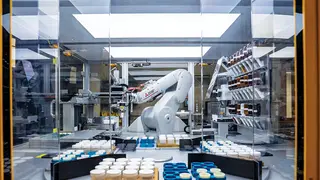
Stanford's James Zou pointed to automation limits as a key constraint. Current robotic systems handle mostly straightforward chemistry procedures, but experiments involving animals or complex biological systems remain difficult to automate. This helps explain why mathematics has seen faster AI integration than experimental biology or drug discovery.
The gap between AI-generated hypotheses and experimental validation could reshape research priorities and funding. Scientists may spend more time managing verification burdens, potentially slowing drug discovery timelines despite faster idea generation. Institutions may need to invest in laboratory automation and validation infrastructure to keep pace with theoretical advances, affecting how research is conducted and where resources are allocated.