Poll shows widespread reader alarm over orbital weapons deployment
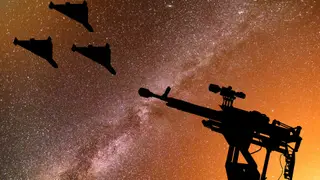
A Live Science survey of over 280 readers found that 80% are concerned about the potential for an arms race in space following the U.S. Air Force's announcement of deployed on-orbit weapons. The 1967 Outer Space Treaty prohibits such weapons but lacks enforcement, raising fears that other nations may follow suit. Reader comments reflect deep unease about the militarization of the final frontier.
The announcement came from Air Force Secretary Troy Meink at the Air, Space and Cyber Conference in Maryland, marking a significant shift in U.S. military posture. The 1967 Outer Space Treaty, signed by both the U.S. and the Soviet Union, prohibits weapons in orbit but contains no enforcement provisions, leaving no clear international recourse.
The Live Science survey drew responses from more than 280 readers, with 80 percent expressing concern about a potential space arms race. A smaller segment, 14 percent, adopted a wait-and-see approach. Reader comments ranged from distrust of current leadership to a defensive posture, with one invoking the principle that preparing for war preserves peace.
The deployment of orbital weapons could reshape international relations and security dynamics. Nations may feel compelled to respond with their own space-based capabilities, potentially triggering a costly arms race. Civilian space activities, including satellite communications and scientific research, could face increased risk of disruption. Public anxiety, as reflected in the poll, may pressure governments to pursue diplomatic solutions, though the treaty's lack of enforcement leaves uncertain pathways. The long-term consequences could extend to global stability and the peaceful use of space for future generations.