Offshore Wind Training Programs Struggle Amid Federal Setbacks
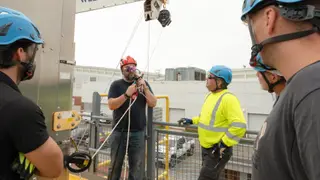
Workforce training initiatives for offshore wind, launched during a federal push for 30 gigawatts by 2030, are now facing uncertainty as the Trump administration curtails clean energy projects. Workers like a former Navy sailor report contracts drying up, despite having completed safety certifications. Training centers are trying to adapt to legal and economic headwinds that threaten the industry's projected need for 77,000 workers.
The 2021 federal target of 30 gigawatts by 2030 catalyzed a broad network of training partnerships spanning community colleges, labor unions, and private developers. Programs ranged from hands-on safety certifications for skilled tradespeople to graduate-level coursework in offshore wind planning, reflecting the industry's projected need for roughly 77,000 workers across construction, maintenance, manufacturing, and grid connection roles.
Training centers are now adapting to survive the current downturn. Some are reducing their footprint, while others emphasize skills transferable to adjacent energy sectors. Graduates continue finding work on the few offshore projects already under construction, such as Sunrise Wind near Long Island, but the pipeline of future contracts has narrowed considerably as federal opposition intensifies.
The uncertainty surrounding offshore wind training could ripple well beyond the energy sector. Workers who invested time and money in specialized certifications may face stalled careers, while community colleges and union programs that expanded to meet projected demand could see enrollment decline. If developers perceive the U.S. market as persistently unstable, the country may lose its competitive position in a growing global industry, potentially affecting regional economies along the East Coast that had positioned themselves as hubs for this emerging workforce.