White House considers limiting diesel exports to curb fuel prices
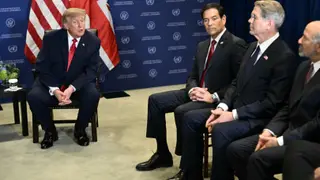
President Donald Trump said on Tuesday that he supports restricting diesel exports to address soaring fuel costs, though he acknowledged the administration has not reached a final decision. Treasury Secretary Scott Bessent indicated officials are studying whether a full or partial ban would be workable given refining capacity. The move, which could be enacted without Congress under the International Emergency Economic Powers Act, is seen as a response to price pressures that have become a political liability for Republicans ahead of the midterm elections.
The proposal has split the administration, with Energy Secretary Chris Wright and Interior Secretary Doug Burgum previously opposing it, while Treasury Secretary Scott Bessent now studies its feasibility. The American Petroleum Institute warns that export limits would worsen refining challenges, and former Bush adviser Bob McNally predicts only a brief, localized price drop followed by lasting damage to U.S. investment credibility. Republican Senator Dan Sullivan of Alaska, facing a competitive reelection, joined the call, citing diesel prices above $6.50 nationally and $6.66 in his state. The White House could act unilaterally under the 1977 International Emergency Economic Powers Act, bypassing a Congress that is largely absent until after the midterms.
This decision could affect millions of households and businesses reliant on diesel for heating, trucking, and agriculture, offering possible short-term relief at the pump. However, it may also strain relations with allied buyers, reduce long-term refining investment, and create regional price disparities. The political calculus is clear: Republicans in tight races see immediate consumer relief as outweighing broader economic risks, but the impact on global energy markets and U.S. credibility could linger well beyond the election cycle.