Taurid Meteor Showers Stretch Across Fall with Fireball Potential
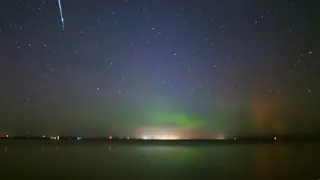
The Taurid meteor showers run from mid-September to mid-December, with the Southern Taurids peaking around November 4–5 and the Northern Taurids peaking around November 11–12. These showers originate from debris of comet 2P/Encke and can produce exceptionally bright fireballs. Viewing conditions for the Southern peak are favorable this year, with a thin moon, and no special equipment is needed to observe them.
The Taurid meteor streams trace their origin to comet 2P/Encke, a relatively small object roughly 4.8 kilometers across. As Earth passes through this comet's debris trail each autumn, particles enter the atmosphere and ignite as luminous streaks, with some producing especially dramatic fireballs. The Southern and Northern branches overlap for several weeks, creating an extended viewing window.
This year's Southern Taurid peak on November 4–5 coincides with a moon only 22 percent illuminated, which should keep the sky dark enough for good visibility. Observers need no equipment—just a dark location, clear skies, and roughly 30 minutes for eyes to adapt. NASA recommends looking after midnight when Taurus sits high overhead.
These showers could draw casual stargazers and families outdoors during otherwise ordinary fall evenings, offering a low-barrier entry point to astronomy. The fireball potential may generate public excitement and social media sharing, possibly boosting interest in comet science and meteor observation. Clear-sky conditions and the favorable moon phase could make this year's display more accessible than usual, potentially encouraging repeat viewing habits and greater appreciation for celestial events among general audiences.