Evidence suggests Cascadia and San Andreas faults can rupture in rapid succession
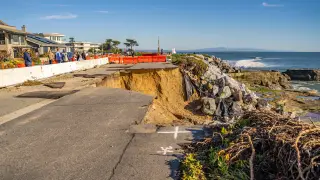
Analysis of 3,100 years of ocean sediment cores revealed turbidite layers indicating that major earthquakes on the Cascadia subduction zone and northern San Andreas fault have sometimes occurred minutes to hours apart. The study, led by Oregon State University, suggests these fault systems can become synchronized, posing a potential combined threat to West Coast cities. The findings challenge the assumption that the 'Big One' is the worst-case scenario.
The study analyzed deep-sea sediment cores spanning 3,100 years, focusing on turbidite layers—deposits left by earthquake-triggered underwater landslides. By matching the timing and structure of these layers between the Cascadia subduction zone and the northern San Andreas fault, researchers identified three instances in the past 1,500 years where ruptures likely occurred within minutes to hours of each other, including the major Cascadia event of 1700. The exact time gaps remain uncertain, but the patterns suggest a synchronization mechanism.
The research grew from a 1999 ocean expedition led by Chris Goldfinger, who has long studied linked earthquakes. Only one modern example of such close timing exists: the 2004 and 2005 Sumatra earthquakes, which struck three months apart. This new evidence extends the concept to the West Coast, implying that the two fault systems may interact over short timescales, a possibility previously considered but rarely observed.
If these faults can rupture in rapid succession, emergency response systems could be overwhelmed, as San Francisco, Portland, Seattle, and Vancouver might face simultaneous crises. National resources, typically mobilized for a single disaster, could be stretched thin, delaying aid and recovery. This finding may also influence building codes and infrastructure planning, prompting cities to prepare for cascading seismic events rather than isolated ones. However, the study's uncertainty about timing means such scenarios remain possible, not certain, and further research is needed to refine risk assessments.