Genomic Analysis Points to Europe as Birthplace of Bats
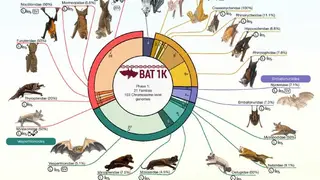
An international consortium sequenced 103 bat genomes and combined them with fossil data to trace the origins of bats. The analysis assigns a 99.2% probability that the common ancestor of all bats lived in Europe during the Late Paleocene. Major bat lineages diversified around 56 million years ago during a period of rapid global warming.
The Bat1K consortium's work represents a major step toward sequencing all living bat species. By combining 103 chromosome-level genomes with fossil data and anatomical traits from 65 species, the team built a statistical framework that assigns a 99.2% probability to a European origin in the Late Paleocene.
The diversification timing—around 56 million years ago—aligns with the Paleocene-Eocene Thermal Maximum, a period of rapid warming that may have facilitated the spread of early bat lineages. The placement of the fossil species Vielasia in the oldest branch suggests laryngeal echolocation emerged very early, closely tied to the evolution of flight.
This research could reshape how scientists understand mammalian evolution and the origins of flight and echolocation. It may influence future paleontological fieldwork, directing researchers toward European fossil sites from the Late Paleocene. The findings could also inform conservation efforts by clarifying evolutionary relationships among bat families, potentially guiding priorities for protecting genetically distinct lineages. Public understanding of bats may shift as their deep evolutionary history becomes clearer.