Astronomers spot first stellar stream in another galaxy
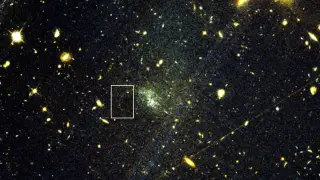
A globular cluster stellar stream has been detected in an ultra-diffuse galaxy outside the Milky Way. Such streams trace gravitational structure and could help map dark matter. The discovery opens new possibilities for studying distant galaxies.
The detection was achieved by combining large astronomical datasets with advanced analytical techniques, which allowed researchers to isolate the extremely faint signal of the stellar stream against the background of its host galaxy. Ultra-diffuse galaxies, such as the one studied here, are notable for their low luminosity and have become a focus of dark matter research in recent years.
The findings were published in Nature and represent a methodological breakthrough. Previously, globular cluster stellar streams could only be studied within the Milky Way, where individual stars can be resolved. Extending this technique to external galaxies demonstrates that these structures can serve as gravitational tracers in a much wider cosmic context, potentially enabling systematic surveys of dark matter distribution across many distant systems.
This discovery could reshape how astronomers measure dark matter in distant galaxies, offering a new observational window that was previously limited to our own galactic neighborhood. If the technique proves broadly applicable, it may accelerate efforts to understand dark matter's distribution and nature, with implications for cosmological models. The research community could benefit most directly, but the broader public may also gain from an improved understanding of the universe's fundamental composition, potentially inspiring future generations of scientists and space enthusiasts.