Metal-Poor Stars Reveal Secrets of Early Galaxy Formation
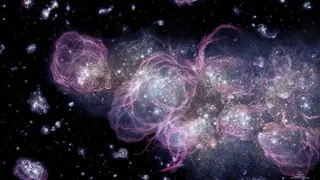
A new survey using Hubble's ultraviolet spectrograph is studying nearby metal-poor O-type stars to understand how the first generation of stars influenced galaxy evolution. These massive, short-lived stars are thought to regulate gas cooling and star formation in their host galaxies. The findings could refine models of the elusive Population III stars that formed shortly after the Big Bang.
The TEMPOS survey targets nearby O-type stars whose ultraviolet emissions mimic conditions in the infant cosmos. Because these stars are relatively close, Hubble's spectrograph can capture their light in detail, offering a local laboratory for processes that occurred billions of years ago. The data helps astronomers trace how supernova explosions enriched surrounding gas with heavier elements.
Understanding these stellar analogs matters because early massive stars acted as cosmic regulators, heating gas and controlling its ability to collapse into new stars. By refining models of Population III stars, the survey could clarify how the first galaxies assembled and evolved, filling a critical gap in cosmological theory.
This research could reshape how astronomers model galaxy formation, potentially refining predictions about the Universe's earliest epochs. Improved models may influence future telescope missions and data interpretation, benefiting academic institutions and space agencies. For the public, such findings deepen understanding of cosmic origins, though direct societal impact remains indirect. Educational outreach could spark interest in astronomy, while taxpayers funding these missions may see returns in scientific knowledge rather than immediate practical applications.