Meteorites Harbor Vast Diversity of Organic Compounds
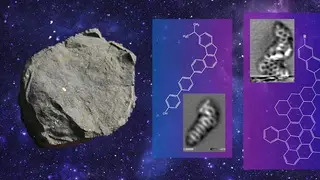
A new study identified tens of thousands of previously unknown organic molecules in the Murchison and Aguas Zarcas meteorites. Using sequential solvent extraction and advanced imaging, researchers catalogued a wide range of carbon-based compounds. The work expands understanding of the organic inventory available in early solar system materials.
The two meteorites examined are both carbonaceous chondrites, a rare class of space rock that preserves chemical signatures from the earliest era of solar system formation. Murchison fell in Australia in 1969, while Aguas Zarcas crashed down in Costa Rica in 2019, yet both yielded surprisingly distinct molecular inventories—fewer than expected compounds overlapped between them, suggesting diverse formation environments. The analytical approach combined a 21-tesla superconducting mass spectrometer, which measures molecular mass with error less than one electron's mass, with atomic force microscopy that physically imaged individual molecules using a carbon monoxide probe tip. This dual method allowed researchers to determine both elemental composition and structural geometry, revealing molecules containing up to 70 carbon atoms and 20 oxygen atoms, with masses reaching 1,000 atomic mass units.
This research could reshape how scientists understand prebiotic chemistry and the origins of life's building blocks. If meteorites carry hundreds of thousands of distinct organic compounds, the raw materials available to early Earth may have been far richer than previously assumed. Astrobiology researchers may use these findings to refine models of how life emerged, while planetary scientists could apply similar analytical techniques to samples returned from asteroids like Bennu. The work may also inform future missions searching for organic signatures on other worlds, though direct societal applications remain distant.