Japan's new quantum machine Shunkai aims for 10,000 qubits by 2031
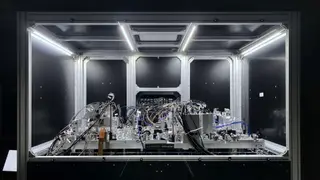
Researchers in Japan have activated Shunkai, a 50-qubit neutral-atom quantum computer that operates at room temperature and includes all necessary software, control, and hardware layers. The team plans to expand the system to 10,000 qubits by March 2031 and integrate it with a supercomputing facility to create a hybrid quantum-GPU center. Shunkai will be opened to external researchers, with a focus on quantum error correction.
Shunkai employs optical tweezers to trap and rearrange individual atoms, enabling precise control over qubit positioning without the cryogenic cooling required by superconducting systems. Its full-stack architecture includes software, control, and hardware layers, allowing users to submit problems and receive outputs through a complete workflow. The machine currently operates at room temperature, a notable departure from the elaborate cooling infrastructure typical of other quantum platforms.
The project's roadmap targets 10,000 qubits by March 2031, with plans to integrate Shunkai into an existing shared supercomputing facility, creating a hybrid quantum-GPU center. External researchers will gain access, with quantum error correction as a primary focus. Current qubit error rates are roughly 1 in 1,000 operations, compared to classical bits' error rates of 1 per billion or trillion, underscoring the reliability challenge.
Shunkai's room-temperature operation and full-stack design could make quantum computing more accessible to researchers beyond specialized physics labs, potentially accelerating practical applications in materials science and cryptography. If the 10,000-qubit target is met, hybrid quantum-classical systems may tackle optimization problems currently beyond supercomputers' reach. However, error correction remains a critical hurdle; until reliability improves substantially, real-world impact may stay limited to research settings rather than broad commercial deployment.