Simulations Suggest Little Red Dots Are Rapidly Growing Black Holes
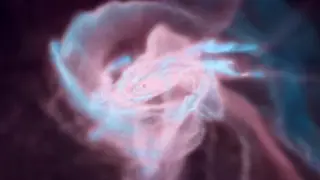
New simulations using the ATERUI III supercomputer propose that Little Red Dots observed by the James Webb Space Telescope represent a phase of rapid black hole growth. Intense radiation from neighboring galaxies suppressed star formation, allowing gas to collapse into a supermassive star that then formed a black hole. This could explain how supermassive black holes appeared so early in the universe.
The ATERUI III simulations represent the most detailed cosmological modeling yet attempted, tracing how radiation from neighboring galaxies altered star formation within individual gas clouds. Far-ultraviolet light suppressed smaller stars, allowing gas to consolidate into a single supermassive star whose collapse created a black hole seed embedded in a dense, radiation-trapping disk. This environment enabled growth rates dozens of times faster than conditions in the modern universe permit.
The simulated black holes closely matched Webb's Little Red Dots, suggesting the telescope captures this rapid growth phase. Because both seed formation and subsequent growth emerged naturally from early-universe conditions without exotic assumptions, the simulations explain why such objects appear so frequently across Webb's observations.
This research could reshape how astronomers interpret early-universe observations, potentially refining models of black hole formation and influencing future telescope mission priorities. If confirmed, it may clarify a long-standing puzzle in cosmology and enhance public understanding of how supermassive black holes emerged so soon after the Big Bang. However, observational verification remains essential, and the findings may also prompt renewed debate about the role of environmental factors in cosmic evolution.