6G to Reach 2.4 Billion Connections by 2035, But 5G Will Remain Dominant
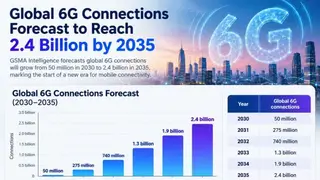
GSMA Intelligence forecasts 6G connections will reach 50 million by 2030 and 2.4 billion by 2035, about 23% of global connections. 5G will still account for 60% of connections in 2035. China and North America are expected to lead adoption.
The forecast highlights a gradual, multi-generational network transition rather than a sudden shift. Early 6G activity through 2032 will center on commercial launches and device ecosystem maturation, with a major global expansion phase beginning around 2033. The projected growth curve shows connections climbing from roughly 50 million to 2.4 billion over five years, a 48-fold increase.
Regional adoption will vary significantly based on existing infrastructure maturity. Markets still expanding 5G coverage and migrating 4G users will likely prioritize returns on current investments over early 6G deployment. Mobile traffic is projected to grow from about 204 exabytes monthly in 2025 to 846 exabytes by 2035, driven increasingly by AI applications, sensors, and extended reality systems that shift traffic patterns toward greater uplink demands.
The coexistence of 5G and 6G through the mid-2030s could shape how consumers and businesses experience connectivity. Regions with faster 6G adoption may see earlier benefits from advanced applications like AI-driven services and immersive technologies, while emerging markets could face a widening digital divide. The shift toward uplink-heavy traffic from sensors and cameras may also influence how networks are designed and priced, potentially affecting data costs and service reliability for everyday users.