UN accord guarantees island nations' rights despite rising seas
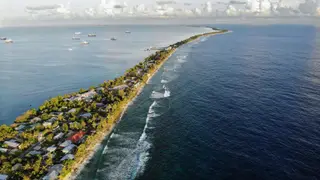
The United Nations General Assembly unanimously approved a declaration stating that rising sea levels will not alter national borders or maritime rights, even if island territories become uninhabitable. The agreement, supported by the U.S., is a rare climate win for multilateralism and could boost aid to vulnerable small island states. It ensures countries like Tuvalu and the Marshall Islands retain sovereignty and control over their exclusive economic zones.
The accord builds on a landmark International Court of Justice ruling from the previous year, which established that a state’s legal existence does not automatically end if its land disappears. The declaration explicitly extends that principle to maritime zones, protecting exclusive economic areas that many island nations rely on for fishing and seabed resources. The Alliance of Small Island States led the campaign, with Trinidad and Tobago’s climate envoy helping initiate talks. The U.S. declined to block the resolution, a notable shift given its withdrawal from other climate agreements during the current administration.
This declaration could provide legal and diplomatic stability for vulnerable populations in nations like Tuvalu and the Marshall Islands, potentially unlocking more climate adaptation funding and easing resettlement negotiations. It may also set a precedent for how international law treats climate-driven territorial loss elsewhere, though enforcement remains uncertain. Governments and aid agencies could use the accord to plan longer-term investments, while affected communities may gain stronger claims to preserve cultural and economic rights even as physical homelands shrink.