Kayrasaurus changliensis: Largest Therizinosaur from Jehol Biota Described
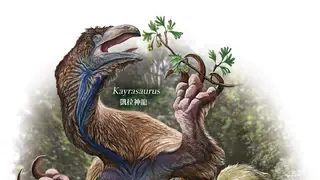
A new therizinosaur species, Kayrasaurus changliensis, was described from a nearly complete skeleton in China's Yixian Formation, dating to about 125 million years ago. It is the largest therizinosaur known from the Jehol Biota, estimated at over 3.6 meters long and possibly a subadult. The find adds to the diversity of these bizarre herbivorous theropods.
The specimen's skeletal features are notably distinctive. Its lower jaw contained over 45 densely packed teeth, the highest count recorded for any known therizinosaur, while its neck vertebrae were elongated beyond the length of its dorsal vertebrae. One manual claw bore a peculiar upward-projecting lip, an unusual trait not previously documented in this group.
The discovery also highlights ecological differentiation within the Jehol Biota. Comparisons with Beipiaosaurus, Jianchangosaurus, and Lingyuanosaurus suggest two body plans: robust, powerful forms like Kayrasaurus and Beipiaosaurus, versus lighter, more agile species. This variation implies therizinosaurs occupied distinct ecological niches, though researchers note that additional complete fossils are necessary to confirm these interpretations.
This discovery could reshape public and scientific understanding of therizinosaur diversity and evolution. Museums and educators may incorporate the new species into exhibits illustrating dinosaur adaptation, potentially increasing interest in paleontology among general audiences. The evidence for distinct ecological strategies among coexisting species may also inform future research directions and funding priorities, though broader societal effects will likely remain limited to academic and educational spheres.