Isotope analysis reveals solo young adults as primary movers in ancient Greek communities
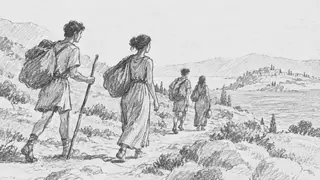
A study of 199 skeletal samples from six Bronze Age Greek sites used strontium isotope analysis to identify individuals who had spent their childhoods elsewhere. The findings indicate that migration between communities was largely driven by young adults traveling alone, rather than by family groups. This pattern offers new insight into social and demographic dynamics in prehistoric Greece.
The research examined 199 skeletons from six Bronze Age sites in Greece, using strontium isotope analysis to trace where individuals lived during childhood. This technique distinguishes local residents from those who grew up elsewhere, revealing patterns of movement across communities. The results point to young adults as the most frequent migrants, often traveling alone rather than as part of larger family units. Such solo movement suggests that personal choice or economic opportunity, rather than collective relocation, shaped demographic shifts. These findings add a nuanced layer to understanding prehistoric social organization, indicating that migration was not always a group endeavor but could be driven by individual agency. The study underscores how scientific methods can illuminate everyday life in ancient societies, offering a clearer picture of who moved and why.
This research could reshape how historians and archaeologists model population dynamics in prehistoric Europe. By highlighting individual mobility, it may prompt re-evaluation of assumptions about kinship-based migration, affecting interpretations of cultural exchange and social networks. Educators and museum curators might incorporate these findings to present a more dynamic view of ancient communities. For the public, it humanizes the past, showing that young adults then, as now, sought new opportunities—potentially fostering a deeper connection to archaeological heritage.