Iran Demands End to Naval Blockade Before Hormuz Talks
Iran said Friday that the U.S. must lift its naval blockade of Iranian ports before formal negotiations can resume. About 80 countries backed a UN statement demanding the reopening of the Strait of Hormuz, while the U.S. and EU are drafting a Security Council plan for an international military mission to protect shipping. Iran's deputy foreign minister accused Israeli PM Netanyahu of using his UN speech to justify war.
The diplomatic picture remains fragmented, with Iran's leadership offering conflicting timelines for reopening the waterway. While President Pezeshkian signaled interest in a pre-election deal, the national security council secretary proposed a shorter, unconditional timeframe, leaving Washington to assess which proposal carries genuine authority. Bloomberg reported both sides exploring a phased exchange of strait reopening for blockade relief.
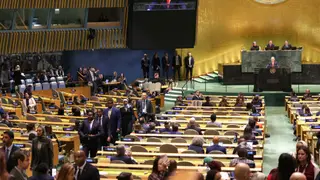
The strait's traffic has collapsed to nine transits, a dramatic decline from its pre-war role carrying roughly one-fifth of global oil trade. Meanwhile, the UN General Assembly became a theater of confrontation, with Netanyahu's address triggering walkouts and Iranian officials characterizing the mass exodus as a rebuke of Israeli policy.
The standoff carries significant global economic implications. Disruption to Hormuz shipping could affect energy prices worldwide, influencing inflation and household costs across multiple continents. The proposed international military mission may escalate tensions further, potentially drawing more nations into the conflict. With US midterm elections approaching, domestic political pressures could shape Washington's negotiating posture, while the conflicting Iranian proposals suggest internal power struggles that may complicate any resolution. The outcome could reshape regional security arrangements and global energy supply chains.