Recovering Grasslands Can Stay Ecologically Distinct for Centuries, Global Study Finds
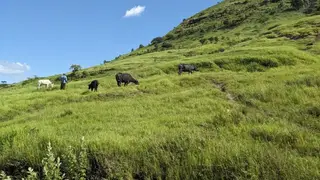
A global analysis of 742 plant species found that secondary grasslands regrowing after plowing or other disturbance tend to be dominated by taller, faster-growing plants. Old-growth grasslands more often support slow-growing, long-lived perennials adapted to drought, fire, and grazing. The pattern held across six continents, helping explain why grassland recovery can remain incomplete even after centuries.
The study compared 742 species across six continents, finding that regrowing grasslands after plowing or farming often host plants that grow tall and reproduce quickly. Ancient grasslands instead tend to contain long-lived perennials that grow slowly and withstand dry spells, burning, and herbivory. The research appeared in PNAS and involved Michigan State University scientists including Lars Brudvig, Ashish Nerlekar, and Lauren Sullivan.
Earlier work by Nerlekar showed secondary grasslands may need decades to match ancient biodiversity, with some species still absent after centuries. In U.S. pine savannas, wiregrass was not a defining species in regrowing sites; white goosefoot, a fast-reproducing annual, was more associated with them.
These findings could shape how land managers, conservation planners, and farmers judge restoration success. If recovering grasslands remain ecologically distinct for centuries, protecting intact old-growth remnants may become a higher priority, while restoration targets may need to account for persistent differences. Communities depending on grassland services could benefit from clearer expectations, though the study does not prescribe policy. It may also influence seed selection and monitoring, since fast-growing species can dominate early recovery.