Soviet Geodesy Satellite COSMOS 1312 Still in Orbit After 44 Years
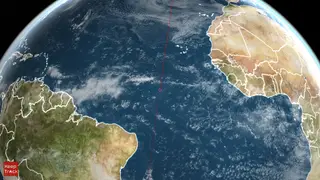
COSMOS 1312 was launched on September 30, 1981, from Plesetsk aboard a Tsiklon-3 rocket to support Soviet military geodesy. The 1,588 kg spacecraft carried the Musson No. 12 payload and was designed for a one-to-two-year mission. It remains tracked in a near-circular orbit about 1,489 km high, with slow decay expected to keep it aloft for decades.
COSMOS 1312 was the twelfth spacecraft in the Musson geodesy line, built on the KAUR-1 bus. Its cylindrical body measured 5.8 meters long and 2.4 meters wide, with eight solar panels spanning 17.8 meters. The Tsiklon-3 launcher, a Yuzhnoye-built three-stage vehicle derived from the R-36 ICBM, carried it from Plesetsk.
Its 82.6-degree inclination let it survey nearly every latitude, supporting Soviet military gravity-field mapping. Tracking over 89 days showed its semi-major axis shrink by about 13.2 km while eccentricity fell toward zero, leaving a nearly circular path where drag remains weak.
Long-lived satellites like COSMOS 1312 may matter to satellite operators, astronomers, and future space-traffic planners because they add to the tracked orbital population. Its stable high orbit could keep it catalogued for decades, potentially complicating collision-risk assessments and debris modeling. For the public, it may serve as a reminder of Cold War space infrastructure still circling overhead. However, its practical effects are likely limited, since it is passive and far above most crewed and commercial LEO activity.