Plesiosaur Vomit Fossils Hint at Offshore Meals
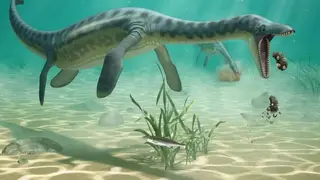
More than 20 fossilized regurgitated masses from North Sea drill cores contain shells of marine prey but were preserved in sediments from an ancient river delta. The study proposes that plesiosaurs ate in deeper offshore waters and later moved into shallower coastal areas to expel indigestible hard remains.
The fossils are regurgitalites: compacted, mucus-coated masses that hardened enough to fossilize. They were found in drill cores from a Jurassic delta, now roughly 50 kilometers off Norway. Because the enclosed bivalves, serpulid tubes, crinoids, and belemnites needed marine salinity, they were likely swallowed elsewhere.
Most such vomit would be scattered by waves and tides. These examples survived rapid sediment burial or entrapment in crustacean burrows. One core also yielded an ichthyosaur bone and coprolites nearby. Cephalopod remains did not match the pellets' size and composition, while fish-produced material was too small.
This finding could enrich public understanding of prehistoric marine ecosystems and how fossils form, benefiting museum visitors, educators, and science communicators. It may also encourage more careful study