Fungi could help turn Martian soil into farmland
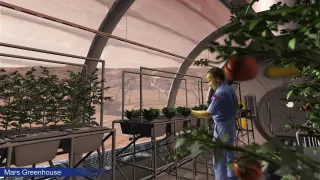
A review by researchers in the United States and Brazil examined whether beneficial fungi could make lunar and Martian regolith more suitable for crops. The microbes may help plants obtain scarce nutrients such as nitrogen, potassium, and phosphorus while coping with harsh conditions. If practical, this approach could reduce the need to ship food from Earth for future space settlements.
Researchers in the U.S. and Brazil reviewed whether beneficial fungi can make lunar and Martian regolith more farmable. The work, published in Frontiers in Astronomy and Space Sciences, focused on nitrogen, potassium, and phosphorus shortages. Fungi that cycle nutrients on Earth and support plant nutrient uptake under abiotic stress were considered, including species tested on the International Space Station.
Arbuscular mycorrhizal fungi, studied in botany since the 1800s, partner with roots and effectively extend their reach. The review also names Trichoderma and Glomeromycota AMF as promising. Future tests must use real lunar and Martian regolith, not simulants, before space farming use.
If fungi prove effective in real regolith, future lunar or Martian crews may depend less on Earth-launched food, potentially lowering resupply burdens and expanding settlement feasibility. Space agencies, agricultural researchers, and biotechnology sectors could gain new research priorities. On Earth, insights into stress-tolerant fungi and nutrient-poor soils might also inform agriculture, though benefits would depend on validation beyond simulations and remain speculative.