Melting Ice in Norway Exposes 48 Prehistoric Arrows, Including 5,000-Year-Old Example
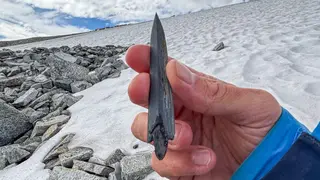
Archaeologists have recovered 48 prehistoric arrows from thawing ice in Norway’s Jotunheimen mountains. One of the oldest, dated to 5,000–6,000 years ago, has a slate arrowhead, a wooden shaft, and traces of ancient bindings. Researchers say the ages of artifacts emerging from Norway’s melting mountain ice are changing.
In Norway’s Jotunheimen range, thawing ice has revealed forty-eight arrows from prehistoric times. One especially old example dates to between 5,000 and 6,000 years ago. Its point is made of slate, its shaft of wood, and it retains remnants of old binding material.
Researchers note that the ages of objects emerging from Norway’s melting mountain ice are shifting. The finds come from icy settings where prehistoric material can be exposed as ice retreats.
The discovery may draw public attention to how melting ice affects archaeology. Researchers, museums, and local communities in mountain regions could face new opportunities and pressures as rare objects emerge. Such finds may deepen interest in prehistoric lifeways and in preserving fragile evidence quickly. They could also prompt discussions about how heritage is documented, shared, and cared for once ice no longer protects it.