Albatrosses May Not Adapt Quickly Enough as Climate Warms
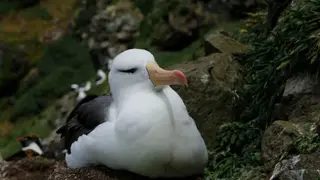
A new modeling study indicates that black-browed albatrosses could decline faster than evolutionary adaptation can rescue them under future warming. Using more than 30 years of population and trait records, researchers projected how inherited characteristics and breeding timing might change. Sharply reducing greenhouse gas emissions cut the estimated extinction risk by about half, while evolution alone was usually insufficient to prevent declines.
Black-browed albatrosses are long-lived seabirds that range widely across the Southern Ocean. A study in PNAS used over thirty years of data from a Kerguelen Islands population, tracking individual traits and population changes. Researchers modeled how inherited characteristics, behavior, and breeding schedules influence survival and reproduction across life stages.
The simulations let natural selection operate over generations while including climate projections and natural variability. Wing length, for example, is linked to juvenile survival. Yet even when helpful traits spread, they often failed to offset projected declines; steep emissions cuts reduced estimated extinction risk by roughly half.
The findings may matter to conservation scientists, wildlife managers, and communities tied to Southern Ocean ecosystems. If warming outpaces adaptation, albatross declines could alter marine food webs and affect industries or cultures that depend on seabird health. The study may also inform how researchers communicate limits of evolutionary rescue, helping planners weigh monitoring and habitat protection. It is not a prediction for all species, but it could influence expectations about how quickly wildlife can adjust.