Irish Researchers Develop Novel Method to Study Exoplanet Atmospheric Conditions
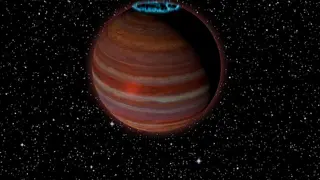
Scientists at Trinity College Dublin have devised a new technique for analyzing atmospheric weather patterns on distant exoplanets, using the planetary-mass object SIMP 0136 as an initial test case. The research reveals that temperature variations and cloud structure play primary roles in shaping weather dynamics on this distant world. This advancement enables astronomers to better understand conditions on the thousands of known exoplanets beyond our solar system.
Irish scientists at Trinity College Dublin have successfully applied a new analytical method to study atmospheric conditions on distant worlds, using SIMP 0136 as their initial research subject. This celestial object, located 20 light-years away in the constellation Pisces, presents an intriguing case study—it remains scientifically ambiguous whether it should be classified as a brown dwarf or a rogue planet, though estimates suggest it possesses approximately 13 times Jupiter's mass.
The researchers employed Principal Component Analysis, a statistical technique that identifies dominant patterns within observational data as the object rotates. This approach effectively separates weather-related atmospheric variations from background noise and minor fluctuations, enabling clearer detection of temperature shifts and cloud formations that drive weather systems on distant worlds.
This research may accelerate humanity's understanding of planetary atmospheres beyond our solar system, potentially informing theoretical models of habitability and climate dynamics. As astronomers continue discovering exoplanets—now exceeding 6,000 known worlds—improved analysis methods could enhance our capacity to characterize atmospheric compositions and conditions. Such advances might eventually inform the search for potentially habitable worlds, though practical applications remain years away and would require substantial additional technological development.