2,000-Year-Old Nomadic Warrior's Grave Discovered in Ancient Burial Mound
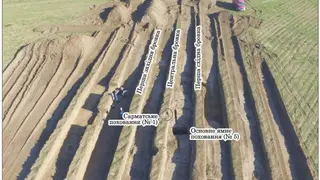
Ukrainian archaeologists have documented the burial of a Sarmatian nomadic warrior approximately 2,000 years ago, complete with an iron dagger positioned at the warrior's side. The grave was discovered within a Bronze Age mound on the Arabatska Spit in southern Ukraine by researchers from the Institute of Archaeology at the National Academy of Sciences of Ukraine. This find contributes to understanding the burial practices and material culture of Sarmatian populations in the region.
Researchers from Ukraine's National Academy of Sciences have identified a burial site dating back approximately two millennia, revealing details about how a Sarmatian warrior was laid to rest. The discovery occurred within an ancient mound structure located on the Arabatska Spit, a geographical region in southern Ukraine with significant archaeological importance. The warrior's grave included an iron dagger, a material artifact that provides insight into the equipment and status of individuals from this nomadic population.
The Sarmatians were a mobile pastoral people whose archaeological record across Eastern Europe remains relatively limited compared to sedentary civilizations. Each documented burial helps researchers piece together information about their social organization, religious customs, and technological capabilities during the classical period.
This discovery may enhance scholarly understanding of Sarmatian societies and their presence in the Black Sea region during antiquity. Academic institutions and museums could benefit from expanded collections and comparative study materials. Regional heritage organizations might use such findings to develop educational resources and cultural tourism initiatives. Broader understanding of ancient nomadic populations could inform contemporary perspectives on migration patterns and cross-cultural interaction in early historical periods.