OpenAI launches collaborative workspace and personal AI agents for enterprise teams
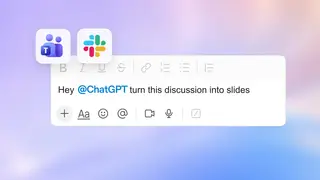
OpenAI announced ChatGPT Spaces, a collaborative hub where teams can organize files, projects, and AI-generated content together, available on Pro, Business, and Enterprise plans. The company also introduced integrations with Slack and Microsoft Teams, allowing users to invoke ChatGPT in workplace communication channels to generate presentations and other work materials. Additional features include meeting notes generation, shareable Pages for documents with visualizations, and collaborative slide creation.
OpenAI's latest rollout marks a significant expansion of ChatGPT into workplace environments, moving beyond a standalone tool into an integrated platform. The introduction of personal AI agents called Dots alongside the collaborative Spaces feature suggests the company is positioning AI as a central component of team workflows. By embedding ChatGPT directly into communication platforms like Slack and Microsoft Teams, OpenAI is reducing friction for enterprise adoption and enabling workers to leverage AI without switching between applications.
The company has also addressed a critical business concern: data security and privacy. The Private Intelligence system represents an attempt to assure enterprises that sensitive documents uploaded to Spaces won't feed into model training, a major barrier to adoption in regulated industries. Meanwhile, features like meeting transcription, automated slide generation, and collaborative documents suggest OpenAI is targeting time-intensive knowledge work tasks.
These tools could reshape how enterprise teams distribute work and manage projects, potentially increasing productivity for some roles while raising questions about job displacement in administrative and content creation functions. The emphasis on collaboration features may benefit larger organizations with resources to integrate new systems, though smaller teams could face adoption barriers. The integration into existing workplace platforms like Slack and Teams may accelerate enterprise AI adoption, though broader impacts on workplace dynamics, skill requirements, and competitive dynamics across industries remain uncertain.