Compact lunar satellite seeks radio signals from the cosmic dark ages era
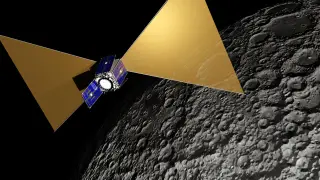
CosmoCube, a small satellite developed in the UK and led by University of Cambridge researchers, will orbit the Moon to detect the 21-centimeter hydrogen line signal from the early universe before the first stars formed. Positioned behind the lunar far side, the spacecraft will shield itself from Earth's radio interference, potentially collecting approximately 1,000 hours of observations over its two-year mission. The findings could illuminate how the universe transitioned from the cosmic dark ages to the current structure of stars and galaxies.
The 21-centimeter hydrogen line represents a direct observational pathway to the universe's earliest epochs, roughly 150 million years after the Big Bang when no stars had yet ignited. By positioning CosmoCube in lunar orbit where Earth's radio interference cannot penetrate, researchers gain access to radio frequencies between 10 and 50 MHz that remain blocked from ground-based observatories by the planet's ionosphere and human-generated electromagnetic noise.
Understanding dark matter's role during this formative cosmic period remains a fundamental puzzle in astrophysics. The observations CosmoCube may collect could reveal how gravitational influence from invisible dark matter shaped hydrogen into the first stellar structures, bridging a critical gap in humanity's timeline of cosmic evolution.
CosmoCube's potential discoveries could reshape astrophysical models of galaxy formation and dark matter behavior, affecting how scientists interpret observations across multiple research disciplines. Successfully detecting these ancient signals may also validate the scientific case for lunar-based observatories, potentially influencing space agency priorities and funding allocation toward future far-side missions. Educational institutions and physics communities worldwide could benefit from insights into fundamental cosmic processes, though practical applications would likely emerge gradually over years of analysis.