Raise Robotics Shares Framework for Moving Construction Robots from Pilot to Production Scale
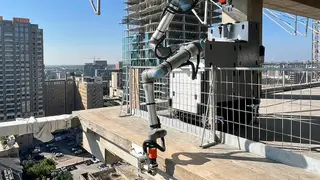
Raise Robotics will present a leadership framework for scaling autonomous field robots, drawing from its record of completing 10 construction projects with over 4,500 robot-hours and zero safety incidents. The framework addresses two critical failure modes—sampling bias and margin stacking—and provides guidance on deciding whether to fix product capabilities or develop operator discipline through playbooks. The methodology includes resource allocation strategies and pre-mobilization gates designed to prevent field deployments from stalling during scale-up.
Raise Robotics has accumulated substantial real-world performance data across a decade of commercial deployments, executing over 4,500 hours of autonomous operations without safety failures. The company's robots are designed for facade installation work—a high-risk task typically performed at building perimeters during construction. The framework being presented addresses a common industry challenge: autonomous systems often enter production at roughly 80% of required capability, creating a decision point about whether improvements should come through engineering refinement or through better operator training and standardized procedures.
The peer-reviewed methodology identifies two specific technical obstacles that derail scaling efforts. Sampling bias occurs when early pilot sites prove atypical of broader deployment conditions, while margin stacking describes how acceptable tolerances at each step of a process—from vehicle transport to final positioning—can accumulate and eliminate safety buffers. The framework provides structured decision-making for robotics teams deciding how to allocate limited engineering resources between product enhancement and disciplined operational practices.
Scaling robotics in construction could reduce labor costs and improve safety on high-risk tasks like facade work, potentially benefiting project timelines and worker health outcomes. However, successful deployment depends on translating lab performance into field reliability—a challenge affecting the broader robotics industry. How companies resolve capability gaps through either engineering or training may influence adoption rates across construction and similar sectors, affecting workforce development needs and the pace at which autonomous systems integrate into existing operations.