SpaceX's Starship Achieves Orbital Flight While Deploying Next-Generation Starlink Satellites
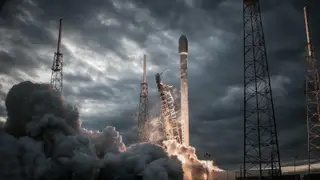
SpaceX's Starship completed its first orbital mission on Flight 14, successfully deploying 26 next-generation Starlink V3 satellites from Starbase despite an engine shutdown during ascent. The mission represents a major milestone as the spacecraft reached full orbital velocity for the first time, bringing the Starlink constellation to over 11,100 operational satellites. NASA simultaneously announced a $359 million commitment to Boeing for Starliner upgrades, positioning the vehicle as the agency's primary crewed spacecraft after SpaceX's Dragon retires from service.
Starship's ascent to orbit marks a watershed moment for reusable heavy-lift spaceflight. The vehicle's ability to reach full orbital velocity—rather than following the suborbital test patterns of earlier flights—demonstrates the maturation of the booster and upper stage systems. The deployment of the larger V3 Starlink satellites underscores why this capability matters: these units exceed the dimensional constraints of traditional launch vehicles, meaning only Starship can carry them to operational orbits.
The mission's success despite an engine failure during the burn phase reveals both the design redundancy built into the system and SpaceX's operational confidence. Controllers' decision to proceed with orbital insertion after losing one of six main engines, rather than executing a preplanned abort, hinged on their assessment that sufficient margin remained for the critical deorbit maneuver. This judgment call reflects thousands of hours of simulation and analysis preceding the flight.
The orbital achievement may accelerate the timeline for global broadband coverage through Starlink while positioning SpaceX's heavy-lift capacity for future lunar and deep-space missions. Simultaneously, NASA's investment in Boeing's Starliner suggests a deliberate strategy to maintain multiple pathways for crewed spaceflight rather than relying solely on one provider. These parallel developments could influence competition, costs, and redundancy in the broader commercial space sector over the coming years.