Cold War-Era Soviet Spy Satellite Remains in Orbit as Uncontrolled Space Debris
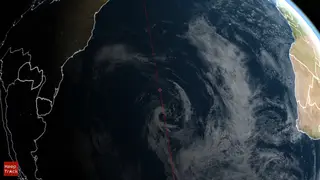
COSMOS 1758, a Soviet signals intelligence satellite launched in 1986 from the Plesetsk Cosmodrome, continues orbiting Earth nearly four decades later as defunct space debris. The Tselina-D class spacecraft, which conducted focused electronic surveillance for Soviet military intelligence during its six-month operational period, has completed over 19,700 revolutions and remains uncontrolled at an altitude of approximately 475-501 kilometers. The 1,750-kilogram satellite exemplifies the persistent challenge of abandoned spacecraft accumulating in low Earth orbit.
The Tselina program represented a two-tiered Soviet approach to electronic intelligence gathering during the Cold War, with broad-scanning satellites identifying emission sources and dedicated platforms like COSMOS 1758 conducting detailed follow-up reconnaissance. Built by the Yuzhnoye Design Bureau, this satellite weighed 1.75 metric tons and operated for approximately six months before becoming dormant, yet its physical structure has remained aloft for nearly four decades.
Orbital decay calculations indicate the satellite loses altitude gradually due to atmospheric friction acting on its deployed solar arrays and antenna structures. With a current radar cross-section of 7.28 square meters, COSMOS 1758 presents a relatively large profile for a defunct spacecraft, and its trajectory suggests eventual atmospheric reentry within several years, though the exact timing remains uncertain without precise density forecasting.
COSMOS 1758 exemplifies broader concerns about space debris accumulation in frequently-used orbital altitudes. Its eventual uncontrolled reentry could potentially disperse fragments across Earth's surface, though the probability of impact in populated areas remains statistically low. The case illustrates how Cold War-era satellite deployments continue raising long-term environmental questions about orbital sustainability and may inform current international discussions on debris mitigation standards and tracking protocols.