Japan's August industrial production declines while retail sales growth disappoints, clouding outlook for rate hikes
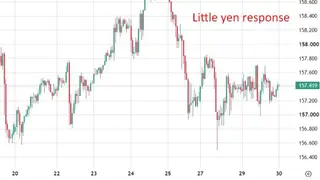
Japan's factory output contracted 1.7% in August, reversing expectations for growth, while retail sales expanded at only 2.7% year-over-year, below the forecasted 3.3%, indicating softening consumer demand. Despite the disappointing data, manufacturers surveyed by Japan's Ministry of Economy project sharp production increases of 3.2% and 3.1% for September and October respectively, suggesting the August decline may be temporary. The mixed signals complicate the Bank of Japan's monetary policy calculus, with some analysts placing the probability of an October rate hike at only 20% to 30%.
Japan's economic momentum has shown signs of stalling in August across multiple fronts. Factory production contracted unexpectedly after months of recovery, while consumer spending growth fell significantly short of analyst expectations, suggesting demand may be weakening among households. The divergence between actual August results and what manufacturers had predicted just a month earlier highlights considerable uncertainty in the near-term economic trajectory.
The Bank of Japan faces a delicate balancing act as it navigates tightening monetary policy. Having already raised borrowing costs to their highest level in decades, policymakers must weigh whether soft consumer and industrial data justifies pausing further increases, or whether inflation prevention remains the priority. The central bank's communications suggest it may tolerate near-term economic softness to achieve price stability objectives.
These mixed signals could affect ordinary Japanese consumers and businesses navigating rising borrowing costs and uncertain demand. Households facing higher loan rates may reduce spending further, potentially deepening the slowdown, while manufacturers could scale back investment plans if confidence weakens. A prolonged period of weak growth combined with higher interest rates could strain household finances and corporate profitability, though offsetting inflation concerns may argue for continued policy tightening regardless of near-term economic weakness.