Museum Fossil Reclassified as Previously Unknown Amphibian Ancestor from Carboniferous Era
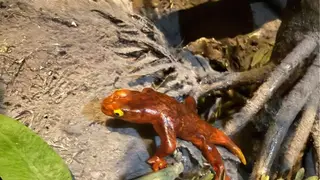
Researchers examining a museum specimen discovered that a fossil long misidentified as Amphibamus grandiceps actually represents a distinct 309-million-year-old amphibian species now named Jeanerpeton mazonensis. The animal, which inhabited a swampy river delta near present-day Chicago, exhibited features intermediate between salamanders and frogs, expanding understanding of early amphibian diversity during the Carboniferous period. The reclassification demonstrates how historical museum collections contain multiple species that were previously grouped together as catchall categories, with careful reexamination revealing overlooked specimens.
The Carboniferous period's Mazon Creek fossil site near present-day Chicago offers exceptional preservation conditions that captured fine anatomical features typically lost to time, including soft tissue impressions, scale patterns, and skeletal details. This richness allowed researchers to identify distinguishing characteristics that separated Jeanerpeton from the previously broader Amphibamus grandiceps category. The discovery reflects a broader pattern within paleontological collections: specimens historically lumped together under single species names may actually represent multiple distinct organisms awaiting closer examination by modern researchers with updated analytical techniques.
Museum fossil reclassifications could refine scientific understanding of early amphibian evolution and the diversity of Carboniferous ecosystems. For educational institutions and researchers, careful reexamination of existing collections may yield additional species descriptions without requiring new excavations. This work could encourage broader institutional investment in cataloging museum specimens and supporting early-career researchers. Public audiences may gain increased appreciation for how scientific knowledge evolves through methodical study and how museums serve as ongoing research resources beyond display functions.