India's Renewable Capacity Surges Past 295 GW as Solar Dominates New Installations
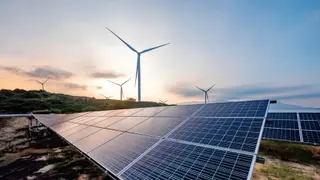
India's renewable energy installed capacity reached 295.55 GW as of August 2026, with solar accounting for 168.04 GW of the total through a mix of ground-mounted, rooftop, and hybrid installations. During the April-August 2026 period, the country added 20.86 GW of renewable capacity, driven primarily by 17.77 GW of solar and 2.42 GW of wind, demonstrating accelerating growth momentum. Recent auctions show a clear market shift toward integrated solar-plus-storage projects with competitive tariff discovery ranging from Rs 2.09 to Rs 3.07 per kWh.
India's renewable sector is undergoing a structural shift toward integrated energy solutions. The country has now assembled a diverse portfolio spanning ground-mounted solar farms, distributed rooftop installations, and hybrid systems. This diversification across multiple technologies and deployment models suggests an effort to optimize resource utilization across varied geographic and demand conditions. Wind capacity has simultaneously doubled in scale during the tracked period, with tariff competitiveness ranging across Rs 3.43–4.17 per kWh, indicating a maturing market where project economics continue to improve.
Storage infrastructure remains central to managing intermittency challenges. Pumped storage projects within the hydroelectric fleet now represent a meaningful grid asset, while recent auction trends show explicit momentum toward solar-plus-storage bundles. This architectural evolution suggests planners recognize that capacity additions alone cannot solve integration challenges posed by variable renewable generation at scale.
The expansion may influence India's energy independence and grid stability as fossil-fuel reliance diminishes. Competitive tariff discovery could reduce electricity costs for consumers and businesses, though distribution depends on state pricing mechanisms and grid investment. Accelerated renewable deployment could support India's climate commitments while potentially affecting traditional energy sector employment. Power sector decentralization through rooftop solar may shift economic benefits to distributed stakeholders, though grid management complexity and intermittency risks could require substantial infrastructure investment to realize intended benefits.