Telecom Operators Cut Customer Churn by Bundling Wireless with Fiber and Fixed Wireless Services
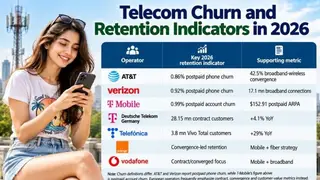
Major telecom operators including AT&T, Verizon, T-Mobile, and European carriers are reducing customer churn rates through convergence strategies that bundle wireless service with fiber and fixed wireless broadband offerings. AT&T achieved 0.86 percent postpaid phone churn in Q2 2026 while increasing customer retention through fiber expansion, with 42.5 percent of its home internet customers also subscribing to wireless service. Network quality improvements, loyalty programs, and premium contract structures are becoming central to retention strategies as mature markets shift focus from subscriber acquisition to keeping existing high-value customers.
The shift toward bundled services reflects a fundamental change in how telecom companies compete. Rather than focusing primarily on acquiring new wireless subscribers, major carriers now view home broadband—whether fiber or fixed wireless—as a tool to strengthen overall customer relationships and reduce switching likelihood. When customers depend on a single provider for both mobile and internet services, disconnecting from one service creates friction for the other, making the relationship stickier.
Revenue quality is becoming as important as subscriber counts. T-Mobile's results illustrate this trend: while adding customers matters, maintaining those relationships at higher price points through premium plans and expanded service offerings generates meaningful revenue growth. European operators have adapted by emphasizing contract-based customers over prepaid connections, prioritizing stability and predictable income in mature markets where finding entirely new subscribers has grown increasingly expensive.
Telecom consolidation around bundled services could reshape competitive dynamics in broadband and wireless markets. Consumers may benefit from integrated billing and simplified service management, though bundling could reduce switching incentives and potentially limit competitive pressure on pricing. Regulators monitoring market concentration may scrutinize whether convergence strategies create barriers to entry for competitors or reduce consumer choice, particularly in regions where fiber infrastructure remains limited and bundled operators control critical connectivity pathways.