Breakthrough in Hydrogen-Boron Fusion Reactions at Chinese Research Facility
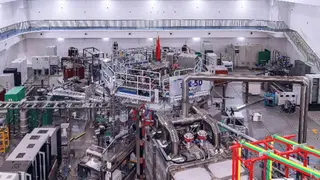
Researchers at a Chinese clean energy company have successfully demonstrated hydrogen-boron fusion reactions at unprecedented rates in their EXL-50U tokamak device. This advancement represents significant progress toward practical fusion energy generation as a sustainable power source.
Hydrogen-boron fusion represents an alternative approach to traditional deuterium-tritium fusion pathways being pursued by many international programs. This particular reaction pathway has long attracted theoretical interest due to its potential advantages, though it presents distinct technical challenges in achieving the conditions necessary for sustained reactions. The demonstration at this Chinese facility using the EXL-50U tokamak indicates progress in controlling and maintaining these reactions at meaningful scales.
The achievement underscores the competitive global landscape in fusion energy development, where multiple research institutions are exploring different technological routes toward viable commercial fusion power. Success in improving reaction rates moves the field incrementally closer to the long-standing goal of net energy gain from fusion processes, a milestone that would fundamentally shift prospects for fusion's viability as a large-scale energy source.
If hydrogen-boron fusion proves commercially viable, it could reshape global energy infrastructure by offering a low-carbon alternative to fossil fuels and conventional nuclear power. Such advances may influence investment decisions in energy sectors and could affect nations' energy independence strategies. The development may also impact workforce demand in fusion-related fields and influence climate-relevant policy discussions, though significant engineering challenges remain before fusion transitions from demonstration to practical power generation.