Force-sensing technology takes center stage at robotics conference as humanoids tackle industrial tasks
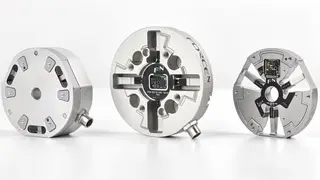
ForceN's CEO will present technical guidance on force and torque sensors at RoboBusiness 2026, covering applications across humanoid robots and strategies for safe handling of diverse object weights. The presentation will distill lessons learned from deployments in surgical, logistics, and field robotics to help manufacturers accelerate humanoid readiness for real-world operations. Force and torque sensing enables robots to perceive and control the pressure they apply, a critical capability as humanoids move into industrial roles requiring precision with both heavy and delicate items.
Robert Brooks founded ForceN based on research conducted during his doctoral studies at the University of Toronto, where he focused on sensing and actuation systems for surgical applications. Over the past decade, the company has expanded its expertise across multiple robotics domains, including space exploration, nuclear remediation, and agricultural automation. This breadth of experience positions Brooks to offer manufacturers practical insights drawn from real-world deployment challenges across different sectors.
The ability to measure force and torque represents a fundamental advancement for robots operating in unstructured environments. Without this sensory feedback, humanoids cannot distinguish between handling a fragile component and a heavy industrial part, creating safety and reliability risks. By formalizing best practices from surgical, logistics, and field robotics into guidance for humanoid developers, ForceN aims to compress the development timeline for robots entering manufacturing and other industries.
The advancement of force-sensing technology in humanoids could accelerate adoption across industries requiring both dexterity and strength. Manufacturers may see faster deployment timelines and reduced equipment damage during the transition from conventional automation to humanoid systems. Workers and businesses in logistics, healthcare, and manufacturing could experience productivity gains, though labor displacement remains a consideration. The standardization of sensing practices across the robotics ecosystem may also establish safer operational parameters for human-robot collaboration in industrial settings.