Failed Spacecraft Servicing Mission Yields Valuable Data for Future Orbital Maintenance Operations
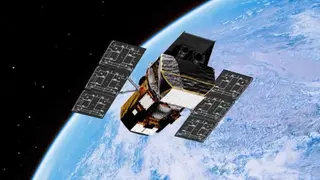
Katalyst Space's LINK robotic spacecraft re-entered Earth's atmosphere on September 25 after failing to successfully boost the orbit of NASA's 22-year-old Swift Observatory, which studies gamma-ray bursts and other cosmic phenomena. Despite the mission's primary objective not being achieved, both NASA and Katalyst view the effort as a success for advancing satellite servicing technology and developing rapid response capabilities for spacecraft in low Earth orbit. The Swift Observatory will eventually re-enter Earth's atmosphere as a result of atmospheric drag, an effect magnified by recent solar activity.
NASA's Swift Observatory has operated continuously since its 2004 launch, making discoveries across multiple cosmic phenomena including the universe's most violent explosions. As with all satellites in low Earth orbit, natural atmospheric drag gradually lowers its altitude—a process recently accelerated by heightened solar activity that expands Earth's upper atmosphere. The agency faced a narrow window to attempt rescue before the spacecraft reached a critical altitude threshold.
Katalyst Space undertook an unusually compressed development schedule, moving from concept to launch in less than a year. The mission required the company to design servicing equipment for a spacecraft never built with such intervention in mind. Though the LINK spacecraft ultimately could not complete its primary objective due to technical complications, both organizations emphasize that the operational data gathered and the rapid-response capability demonstrated provide valuable lessons for future satellite maintenance efforts.
This mission outcome may influence how space agencies and commercial firms approach aging satellite preservation. The effort's partial success could shape investment decisions in on-orbit servicing technology, potentially affecting long-term observatory lifespans and mission extensions. Additionally, the demonstrated ability to mobilize spacecraft development within compressed timelines may inform how institutions respond to other orbital emergencies, though the economics of such rescue operations remain a consideration for future preservation attempts.