Regulatory Testing Shows Jio Dominates Download Speeds While Airtel Excels in Upload Performance Across Indian Region
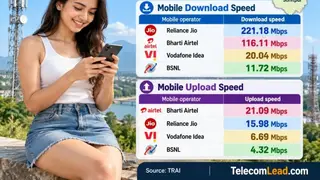
India's telecom regulator conducted a network performance assessment in Assam's Sonitpur district that revealed substantial speed differences among carriers, with Reliance Jio achieving 221 megabits per second average download speed nearly double Airtel's 116 megabits per second result. Airtel recorded superior upload speeds at 21 megabits per second compared to Jio's 16 megabits per second, while Vodafone Idea and BSNL trailed significantly due to reliance on 4G and 2G technologies. Coverage testing demonstrated Jio's 3.4 percent signal gap advantage over Airtel's 4.0 percent, with both operators substantially outperforming competitors lacking 5G infrastructure.
India's telecom regulator systematically evaluated carrier performance across multiple dimensions in a northeastern district, moving beyond simple speed comparisons to assess real-world reliability. The testing methodology distinguished between operators by network generation, measuring Jio and Airtel across their 5G deployments while evaluating competitors limited to 4G and 2G infrastructure. This technological divide explains much of the performance gap observed.
Voice quality metrics revealed equally important findings alongside data speeds. Both leading operators maintained perfect call completion records across hundreds of test calls, while competitors experienced substantial failures. Call-silence measurements, tracking audio disruptions exceeding three seconds, further demonstrated network stability variations that directly affect user experience during conversations.
These results could influence consumer decisions and competitive positioning in India's telecom market, particularly for users prioritizing download performance or upload requirements for content creation. Network quality disparities may affect rural and urban service equity, since test location selection determines which populations benefit most from measured improvements. The findings might also inform regulatory policy on infrastructure investment requirements and spectrum allocation, potentially shaping competitive conditions for carriers operating with or without 5G technology access.