Perseverance rover reveals ancient Mars experienced multiple phases of water interaction
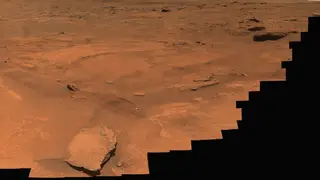
NASA's Perseverance rover has discovered evidence that the Margin Unit region in Jezero crater on Mars underwent three distinct episodes of water interaction, including exposure to hot hydrothermal fluids. The findings indicate that early Mars hosted more intricate water systems than scientists previously understood, involving ancient lakes, groundwater circulation, and thermal activity. These discoveries further demonstrate that Mars was once a far wetter and more geologically active planet than its current arid state.
NASA's Perseverance rover discovered that rocks in Jezero crater's Margin Unit are igneous rather than the sedimentary rocks scientists anticipated. This unexpected composition actually proved advantageous, as igneous rocks formed from volcanic activity preserve detailed mineral information and evidence of water interactions more effectively than sedimentary deposits would. Researchers used the rover's SuperCam instrument to analyze mineral composition across roughly 265 meters of elevation.
The three distinct water episodes identified by the research team—involving ancient lakes, circulating groundwater, and thermal activity—were detected through carbonate minerals visible from orbit. Initial assumptions suggested these carbonates formed solely from lake interactions, but the Purdue-led team's ground-based analysis revealed a far more complex geochemical history spanning multiple geological phases on early Mars.
These findings could reshape scientific understanding of early Mars' habitability and potential for supporting microbial life. If Mars hosted sustained hydrothermal systems alongside surface water, it may have offered more diverse chemical energy sources necessary for biology. The discovery could influence future mission planning and drilling strategies aimed at detecting biosignatures. Additionally, insights into Mars' ancient water cycles may inform theories about planetary climate evolution and atmospheric loss over billions of years.